Reducing Legal Risk Through Proper Pool Safety Compliance
Pool ownership in Queensland carries significant legal responsibility. A compliant pool safety barrier is not only designed to prevent child access — it also plays a critical role in reducing homeowner liability.
For property owners on the Gold Coast, maintaining pool safety compliance protects families, visitors and your legal position.
Legal Responsibility of Pool Owners in Queensland
Under Queensland pool safety laws, property owners are responsible for ensuring their pool barrier remains compliant at all times.
This responsibility applies whether the property is:
- Owner-occupied
- Tenanted
- Listed for sale
- Used as a short-term rental
Compliance is not limited to inspection periods. It is an ongoing legal obligation.
How a Non-Compliant Barrier Increases Liability
If an incident occurs and your pool barrier does not meet Queensland standards, you may face:
- Government fines
- Enforcement notices
- Civil liability claims
- Insurance disputes
- Significant legal costs
Even minor compliance failures — such as a gate that fails to self-latch — can increase risk exposure.
Maintaining compliance reduces the likelihood of negligence claims.
What Makes a Barrier Legally Compliant?
To meet Queensland standards, your barrier must:
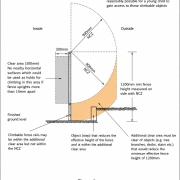
- Be at least 1200mm high
- Have no gaps greater than 100mm
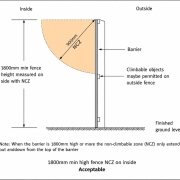
- Maintain a 900mm non-climbable zone
- Include a self-closing, self-latching gate
- Display compliant CPR signage
A licensed Pool Safety Inspection on the Gold Coast confirms these elements meet legislative requirements.
The Importance of a Valid Pool Safety Certificate
A Pool Safety Certificate (Form 23) demonstrates that your barrier met compliance standards at the time of inspection.
Certificates are required when:
- Selling a property
- Leasing a property
- Renewing compliance for shared pools
Validity:
- 2 years for non-shared pools
- 1 year for shared pools
Holding a valid certificate provides documented evidence of due diligence.
Ongoing Maintenance Protects Your Position
Certification alone is not enough. Homeowners must ensure barriers remain compliant between inspections.
Regular checks should include:
- Testing gate functionality
- Removing climbable objects
- Checking fence stability
- Inspecting for corrosion or structural movement
Failing to maintain compliance after certification can still expose you to liability.
Insurance Considerations
In the event of an accident, insurers may assess whether:
- The pool barrier met Queensland standards
- The homeowner maintained reasonable care
- A valid certificate was in place
Non-compliance may impact insurance claims.
Maintaining compliance demonstrates proactive risk management.
Protect Your Home and Legal Standing
Arranging a professional inspection ensures your pool barrier:
- Meets current Queensland legislation
- Reduces liability exposure
- Protects occupants and visitors
- Provides documented compliance
For Gold Coast homeowners, proactive compliance is both a safety and legal necessity.
Have a question or need help? Contact us here – https://poolcompliancegoldcoast.com.au/contact-us/
Book an Inspection – https://poolcompliancegoldcoast.com.au/booking/