
Helensvale Neighbouring Deck Access and Louvre Window Compliance
Every property presents its own unique compliance challenges, particularly where neighbouring properties have changed after the original Pool Safety Certificate was issued.
This Helensvale property featured an elevated swimming pool and entertaining area overlooking a lower garden. While the pool itself had previously been certified, changes made to the adjoining property had introduced a new and significant access hazard that required attention.
Elevated Pool Design
The swimming pool and outdoor entertaining area were located on the upper level of the property, with stairs leading down into the rear garden.
From the lower garden, the pool structure itself was approximately 1.7 metres above ground level. This vertical drop effectively formed part of the pool barrier and generally satisfied the required barrier height.
However, compliance does not end with the inspected property. Changes made on neighbouring land can also affect the effectiveness of a pool barrier.
Neighbouring Deck Created a New Access Hazard
Since the previous pool certification, the adjoining property had constructed a timber deck at approximately the same height as the inspected pool area.
This altered the level difference between the two properties and created an unexpected access point.
A child could walk across the neighbouring deck, move between the edge of the deck and the pool barrier, step onto the boundary fence and potentially gain access to the pool enclosure.
The property owner confirmed that the neighbouring children regularly used this route to move between the two properties, demonstrating that the access point was not merely theoretical but was being used in practice.
This represented a significant pool safety risk and required rectification before a Pool Safety Certificate could be issued.
Proposed Solution
To eliminate the access hazard while maintaining the appearance of the property, practical engineering solutions were discussed.
These included:
- Installing a full-height 3mm Perspex panel to eliminate the climb path.
- Alternatively, extending the existing frameless glass fencing by installing an additional glass panel.
Either solution would remove the potential access point and restore the effectiveness of the pool barrier.
Louvre Window Compliance
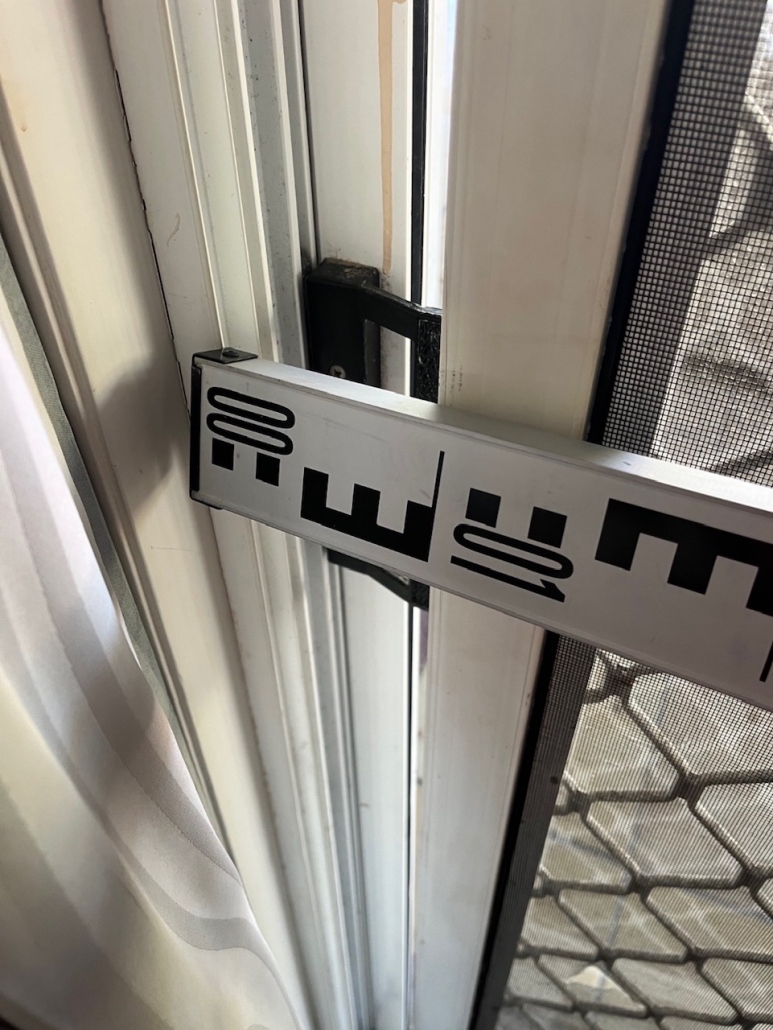
The inspection also identified a compliance issue involving louvre windows located between the lounge room and the pool area.
When fully opened, the gap between the louvre blades measured approximately 150mm, exceeding the maximum permitted opening of 100mm.
This created a potential entry point into the pool enclosure.
The recommended solution was to install a permanently fixed steel mesh security flyscreen that would prevent access while allowing ventilation to remain available.
Glass Pool Gate Adjustment
The frameless glass pool gate was also tested during the inspection.
The gate:
- Self-closed correctly from the fully open position.
- Self-closed correctly from the halfway position.
- Failed to self-close from the resting position, remaining stationary instead of completing the closing cycle.
Although this may appear to be a minor adjustment, Queensland legislation requires the gate to self-close and self-latch from every position.
The gate hinges were therefore adjusted until the gate consistently closed and latched correctly from the fully open, halfway and resting positions.
Inspection Summary
The following compliance issues were identified:
- Neighbouring deck creating an unintended access path.
- Potential climb hazard via the side boundary fence.
- Louvre windows opening beyond the permitted limit.
- Glass pool gate requiring hinge adjustment.
Recommended rectification works included:
- Installing Perspex or an additional glass panel to remove the neighbouring access point.
- Fitting a fixed steel mesh security screen to the louvre windows.
- Adjusting the glass gate hinges to restore reliable self-closing and self-latching performance.
Once these works are completed, the pool barrier will again provide the level of protection required under Queensland pool safety legislation.
From the Inspector
This inspection highlights why pool compliance should never be viewed as permanent.
The pool itself had not changed significantly since its previous certification. However, construction on the neighbouring property fundamentally altered the effectiveness of the barrier and created a new access point that simply did not exist when the property was last inspected.
It also demonstrates why every gate must be tested from multiple positions and why windows opening into the pool enclosure require careful assessment. A professional inspection considers how the entire environment functions—not just the fence itself.
Contact Pool Compliance Gold Coast
If your property has an elevated pool, neighbouring structures, louvre windows or frameless glass fencing, Pool Compliance Gold Coast can provide a professional inspection and practical advice to help you achieve full pool barrier compliance.
Pool Compliance Gold Coast

