
What Happens During a Pool Safety Inspection?
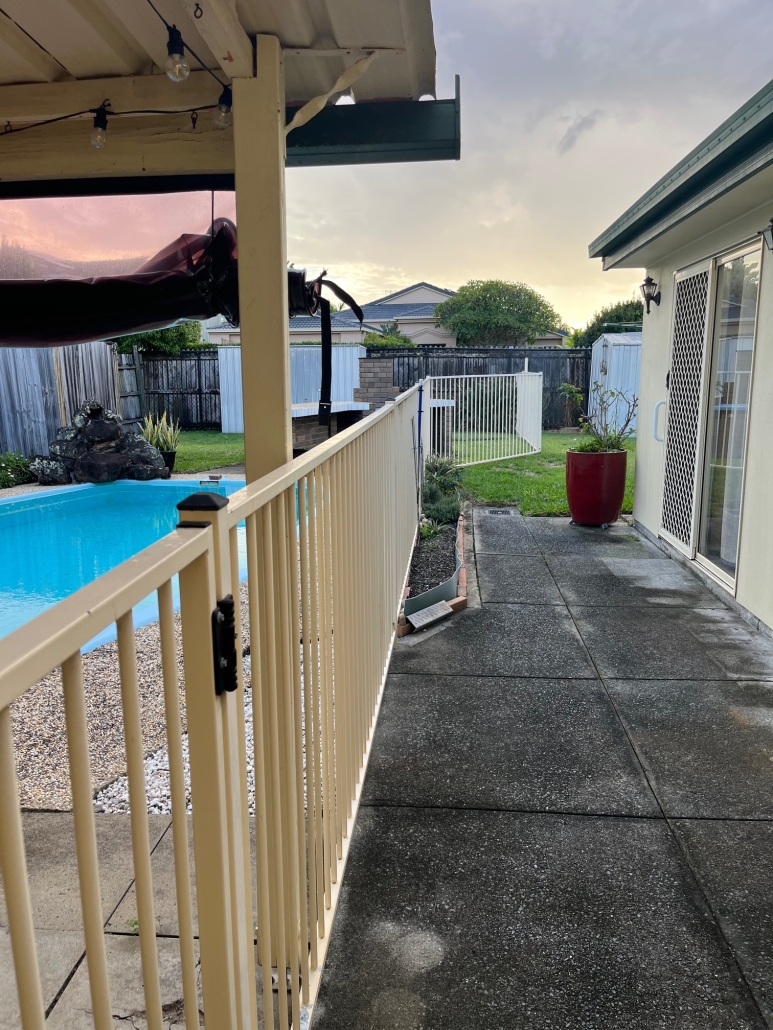
If you’ve never arranged a Pool Safety Inspection before, it’s natural to wonder what the inspector will actually be looking for.
Many homeowners are pleasantly surprised to learn that the inspection is not about finding fault. Instead, its purpose is to ensure your pool barrier complies with Queensland pool safety legislation and helps reduce the risk of young children gaining unsupervised access to the pool.
At Pool Compliance Gold Coast, we believe inspections should be thorough, professional and informative. We take the time to explain any issues identified and provide practical advice to help property owners achieve compliance.
Before the Inspection
Before arriving, we recommend ensuring the entire pool barrier is accessible.
Please unlock all gates and remove any items that may prevent the inspector from viewing the complete fence line.
If you have recently completed repairs or maintenance, it’s also helpful to let the inspector know so those areas can be carefully checked.
The inspection itself usually takes between 30 and 60 minutes, depending on the size and complexity of the pool barrier.
What Is Inspected?
Every swimming pool is different; however, all inspections follow Queensland pool safety requirements.
During the inspection, we will assess:
Pool Gates
Every gate is checked to ensure it:
- Opens correctly.
- Self-closes from the fully open position.
- Self-closes from the halfway position.
- Self-closes from a near-closed position.
- Self-latches every time.
- Cannot be easily propped open.
Gate hinges, springs and latching mechanisms are also inspected for wear and correct operation.
Pool Fencing
The entire pool barrier is inspected to confirm:
- Minimum barrier heights are maintained.
- Fence panels are secure.
- There are no excessive gaps beneath or between fencing.
- Glass fencing remains correctly aligned.
- Boundary fencing remains compliant where it forms part of the pool barrier.
Even small movements in fencing over time can affect compliance.
The Non-Climb Zone
One of the most common reasons pools fail inspection is because climbable objects have been placed too close to the barrier.
The inspection includes checking for:
- Outdoor furniture.
- Pot plants.
- BBQs.
- Storage boxes.
- Children’s toys.
- Garden ornaments.
- Pool pumps and equipment.
- Garden taps.
- Hose reels.
- Trees and shrubs.
These items can unintentionally provide footholds that reduce the effectiveness of the barrier.
CPR Signage
Queensland legislation requires every regulated swimming pool to display a compliant CPR sign.
The sign is checked to ensure it:
- Is present.
- Is clearly visible from inside the pool area.
- Is securely fixed.
- Remains legible.
Missing or damaged CPR signs are one of the simplest compliance issues to rectify.
Common Issues We Find
Every week we inspect pools throughout the Gold Coast and regularly identify similar maintenance issues.
These include:
- Gates that no longer self-close.
- Hinges requiring adjustment.
- Magnetic latches not engaging.
- Outdoor furniture within the non-climb zone.
- Taps creating climb hazards.
- Missing CPR signs.
- Boundary fences that have moved over time.
- Soil build-up preventing gates from opening freely.
- Gaps beneath fencing exceeding allowable limits.
Most of these issues are relatively minor and can usually be rectified without major expense.
What Happens If Your Pool Passes?
If your pool barrier complies with Queensland pool safety legislation, a Form 23 Pool Safety Certificate can be issued.
This certificate confirms that the pool barrier complied at the time of inspection.
For many homeowners, landlords and property managers, obtaining the certificate provides confidence that the pool barrier has been professionally assessed.
What Happens If Your Pool Doesn’t Pass?
If compliance issues are identified, don’t panic.
Most pools that fail inspection only require minor rectification work.
Your inspector will explain each issue clearly and discuss practical options for achieving compliance.
Once the required work has been completed, a reinspection can be arranged.
From the Inspector
One thing I always tell clients before an inspection is that we’re not looking for reasons to fail a pool.
We’re looking to ensure the barrier provides an effective level of protection.
In many cases, something as simple as moving outdoor furniture, adjusting a gate hinge or replacing a CPR sign is all that’s required to achieve compliance.
Why Choose Pool Compliance Gold Coast?
Pool Compliance Gold Coast provides professional Pool Safety Inspections for:
- Homeowners
- Landlords
- Property Managers
- Real Estate Agencies
- Property Sellers
- Body Corporates
We proudly service:
- Helensvale
- Hope Island
- Paradise Point
- Runaway Bay
- Coomera
- Upper Coomera
- Robina
- Benowa
- Ashmore
- Southport
- Burleigh Waters
- Broadbeach Waters
- Mermaid Waters
and all surrounding Gold Coast suburbs.
Our inspections are thorough, practical and focused on helping property owners achieve compliance as efficiently as possible.
Related Articles
- What Is a Pool Safety Certificate?
- Preparing Your Pool for Inspection – A Simple Checklist
- Five Common Reasons Gold Coast Pools Fail Inspection
- What Happens If Your Pool Fails Inspection?
Contact Pool Compliance Gold Coast
Pool Compliance Gold Coast
Licensed Pool Safety Inspector
✔ Pool Safety Inspections
✔ Pool Safety Certificates
✔ Rental Property Pool Safety Inspections
✔ Pre-Sale Pool Safety Inspections
✉ info@poolcompliancegoldcoast.com.au
🌐 www.poolcompliancegoldcoast.com.au
Whether you’re selling your home, managing a rental property or simply want peace of mind that your pool barrier complies with Queensland legislation, contact Pool Compliance Gold Coast today to arrange your professional Pool Safety Inspection.

